


Welcome to the AI Safety Newsletter by the Center for AI Safety. We discuss developments in AI and AI safety. No technical background required.
In this edition, we look at the implications of the recent midterm election results for AI safety. We also look at debates over the best approach to reducing AI risk—whether to convince AI developers to stop advancing capabilities, or to ensure that the developers considered the most responsible are in the lead.
Listen to the AI Safety Newsletter for free on Spotify or Apple Podcasts.
US Voters Reject Data Centers in Midterms
Last week’s midterm election results were a success for Democrats and also for pro-AI regulation advocates. In one striking example, the political action committee Tomorrow Together, which backs candidates supporting AI and data center regulations, won all six races that it spent in.
It is unclear how strongly AI impacted the results of elections to Congress. According to one poll, 56% of voters said that AI and data centers were a crucial or major factor in their vote for Congress. However, a higher percentage of people cited other factors, including government corruption, the cost of living, the Iran war, and immigration enforcement. Some industry figures have downplayed suggestions that the results constitute a vote against AI, saying they are instead a verdict on President Trump.

The verdict on data centers was clearer than on AI more generally. As well as electing representatives to Congress, residents in 10 states were asked to vote directly on questions related to data center infrastructure. In 44 out of 45 such cases where counts are complete, the electorate either backed new restrictions or rejected new developments, sending a strong signal about people’s views on data centers specifically.
Data centers are only one AI-related issue. Campaigns against data centers have so far focused primarily on environmental impacts, noise, and concerns about increased utility bills for residents living nearby. Another possible voter motivation is a dislike of big tech money influencing politics. However, it is more difficult to evaluate how much the risks of AI itself—such as unemployment, potential harms to children, and catastrophic loss-of-control scenarios—affected people’s decisions.
Data center restrictions may be insufficient to address catastrophic AI risks. Companies have been rushing to build data centers and to secure energy for them because one of the main ways of creating more capable AI models is to use more computing power to train them. This rapid build-out is unwelcome in many neighboring communities, and is in some cases crowding out housing construction or even driving houses to be demolished, fueling a strong public backlash. However, blocking data centers in some US states will not stop AI development, as construction projects will simply be relocated to other states. Even under a nationwide ban, the immense economic incentives would drive companies to build the infrastructure in other countries instead.
Moreover, AI progress can still continue without new data centers, as scaling computing power is not the only way of improving AI models. For example, AI engineers can also make algorithmic efficiency improvements, which increase model capabilities without increasing computing power. As AI development accelerates, it is feasible that AI systems will become powerful enough to pose a catastrophic risk before data center capacity becomes a bottleneck to progress.
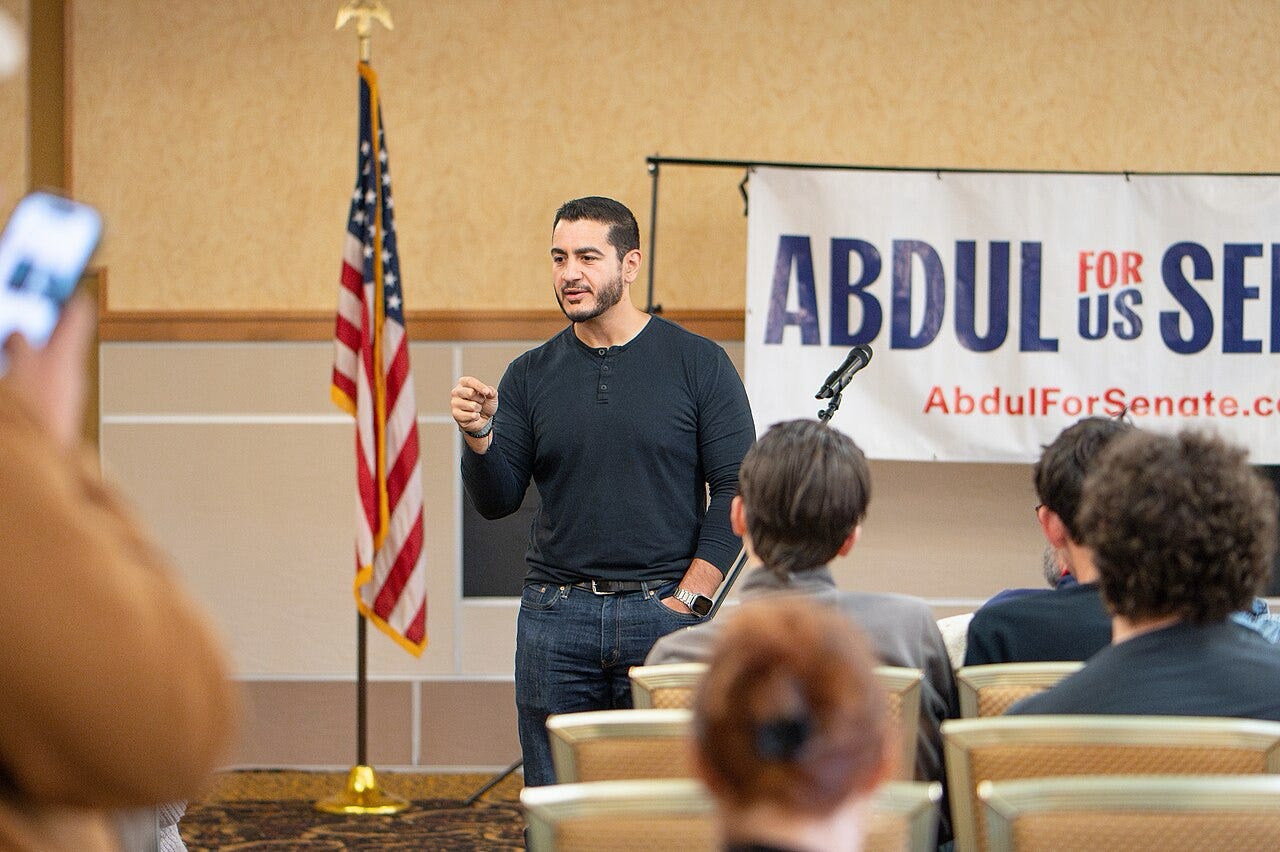
Preventing an AI catastrophe may therefore require regulations targeting the development process itself. Among the newly elected officials, it tends to be those from the progressive wing, including Abdul El-Sayed, senator-elect for Michigan, who favor stronger measures such as a pause on AI development. It is currently unclear whether these stronger interventions would receive broader support. However, politicians’ stances on data centers have shifted quickly in line with public opinion, and the same could happen with attitudes toward AI itself. Indeed, Representative Greg Casar has already said that Democrats “should be hauling in the CEOs of the large AI companies and grilling them about the risks that they are imposing to the American people.”
Diverging Approaches Split the AI Safety Ecosystem
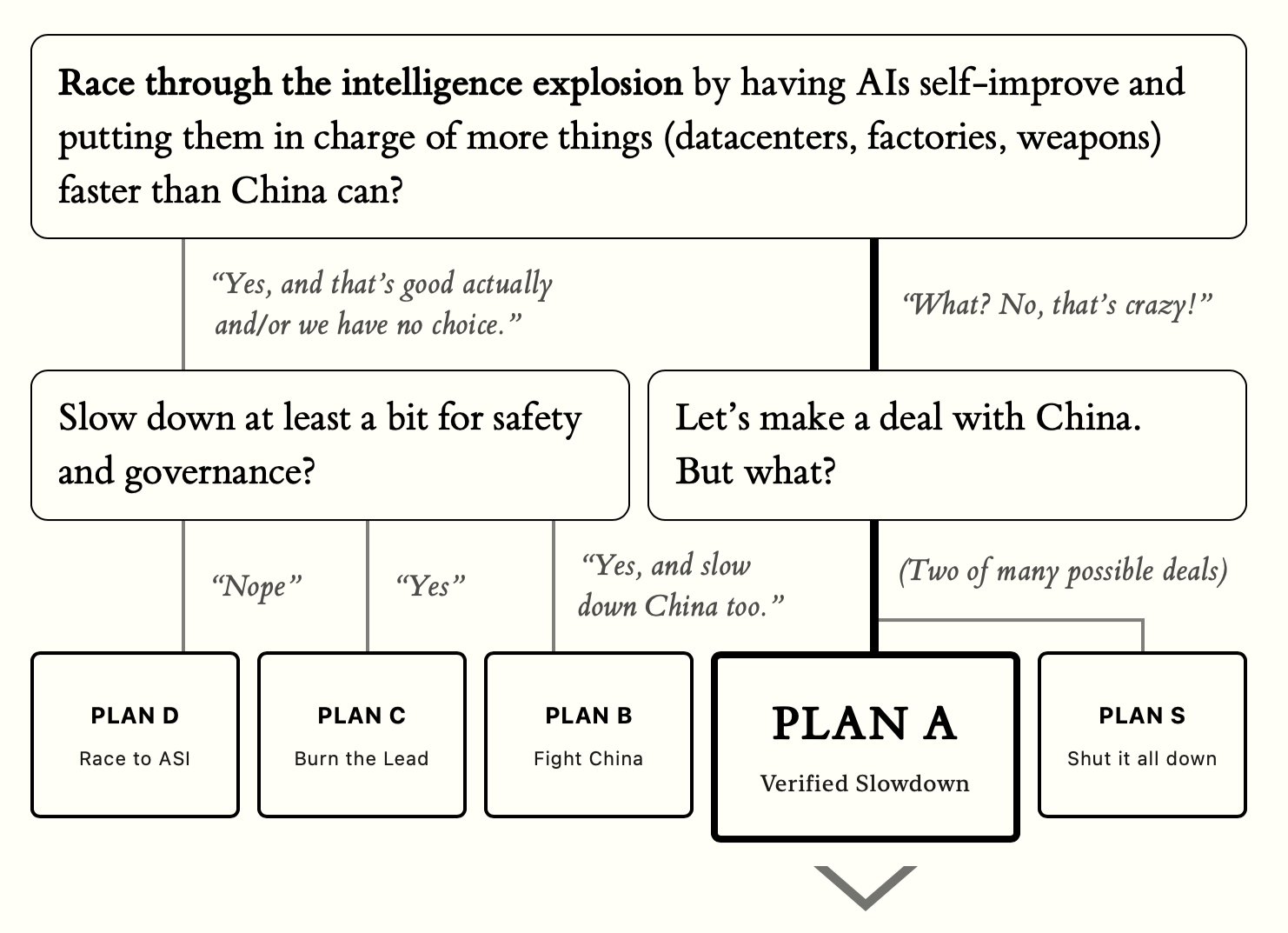
Within the AI safety ecosystem—which is made up of several hundred people, mostly based in Silicon Valley and Washington, DC—there is significant debate over how best to reduce the risk of an AI disaster. Divisions have recently deepened over whether to prioritize getting a global pause on frontier development or to focus on keeping companies viewed as more responsible in the lead. The latter approach is seen as more industry-friendly, raising concerns that the established AI safety ecosystem is too intertwined with AI companies.
Effective Altruists typically favor alignment efforts and support Anthropic. A movement known as Effective Altruism (EA) is a dominant force within AI safety. EAs often argue that the development of advanced AI is nearly inevitable, and that it is therefore important to ensure the technology is developed by responsible actors. The rationale is that responsible developers will work to align AI systems with human values so that they do not take harmful actions or compete with humans once they become more capable than us. As a result, EAs were involved in establishing several frontier AI developers. They retain a particularly strong presence at Anthropic.
A different approach says companies should simply stop developing AI capabilities. Proponents of an alternative strategy say that researchers are unlikely to figure out how to align AI systems with human values before they become capable of causing catastrophe. Instead of focusing on trying to solve this technical problem, they argue that AI companies should stop improving capabilities—even if they have no guarantee that others will do the same—and join efforts to enact a global pause on AI development.
EAs have justified Anthropic’s continued racing. Influential AI safety writer Scott Alexander recently published an essay opposing the strategy of getting AI companies to unilaterally stop development, which he calls “Stop Unilaterally + Raise Awareness (SURA).” Alexander argues that if the most responsible actors step out of the race, development will instead be led by actors who will invest less in safety. He acknowledges that catastrophic AI risks would be much lower under a global pause, but argues that the chances of achieving a pause are not high enough that we can do without a backup plan. To retain such a backup, he proposes that Anthropic should keep advancing capabilities and, if there is no global pause, “burn its lead” by pivoting to intense alignment research when AI capabilities reach a critical threshold.
Skeptics question whether Anthropic can be trusted. SURA advocates argue that Anthropic may not be as trustworthy as EAs seem to believe. The company weakened its own safety commitments in February this year and recently proposed an AI regulation bill that has been strongly criticized as inadequate. Former Anthropic employee Jacob Coxon, who resigned in September citing human extinction risks, said that neither OpenAI nor Anthropic was acting responsibly. One commenter on Alexander’s essay asked: “what about the chances that Anthropic will safetywash / sanitywash pushing forward RSI [recursive self-improvement]? What about the chances that the main difference between them and OpenAI is that they’ll do more handwringing?”
There are concerns that the AI safety ecosystem is too intertwined with Anthropic. Richard Ngo, a former OpenAI employee, suggested that the post seemed like a “knee-jerk defense of Anthropic.” Daniel Kokotajlo, executive director of the AI Futures Project, disagreed with the post, highlighting that AI safety advocates move in the same social circles as AI company employees and that this could cloud their opinion of companies. A biased view of Anthropic within the AI safety ecosystem could steer AI safety efforts toward supporting it—potentially to the neglect of better strategies.
AI safety needs to adapt to a changing political landscape. Last week’s midterm elections in the US indicated pro-regulation sentiment among the American public and brought in a raft of pro-regulation representatives. Arguments for supporting Anthropic have generally hinged on the notion that a global pause is unlikely, but such a pause may now be far more politically feasible. AI safety advocates may therefore need to adapt their approach to take advantage of this opportunity.
In Other News
Government
The New York Times reported that White House officials believe Nvidia CEO Jensen Huang may have been targeted by a businesswoman acting as a spy for the Chinese government. Huang has admitted having an affair and Nvidia has announced it is investigating a possible foreign intelligence effort.
The Associated Press reported that officials at CAISSI, the independent government body tasked with assessing AI models’ safety, were recently asked to report to the White House, raising questions about CAISSI’s independence.
Reuters reported that in the week before the US midterm elections, hackers targeted the website of the Federal Election Commission, which monitors spending in election campaigns and enforces federal campaign finance laws.
The Australian government announced it will require AI companies to report cybersecurity breaches by AI agents and will consider changing criminal law to address AI risks, following a review of the attack by OpenAI agents on an Australian government healthcare website.
In AI Frontiers, Yonathan Arbel, Simon Goldstein, and Peter N. Salib argue against recent calls to nationalize AI, saying that the government can address AI risks more effectively with narrower measures.
Industry
The nonprofit METR published a report on how AI is accelerating development at Anthropic, estimating that progress is now about twice as fast as it was between March 2024 and October 2025.
Severe cyberattacks, likely AI-assisted, have continued, including a $6.3 billion theft from the cryptocurrency exchange Binance, further attacks on freezers in European supermarkets, and an attack against Vanderbilt University.
New research from OpenAI found that its model GPT-6 Astra appears to deliberately underperform when tasked with doing some types of AI safety research.
Chinese AI developers DeepSeek and Moonshot reportedly used Astra to train their latest models.
According to CNBC, Moonshot sought access to advanced AI chips located in Europe, because export controls have restricted their sale to Chinese companies.
Elon Musk’s company xAI reportedly offered to buy more than 400 homes in a Mississippi community, on the condition that the sellers do not join a lawsuit over the noise generated by a nearby power plant intended to power data centers.
A federal judge allowed an environmental lawsuit against xAI to proceed, rejecting the company’s motion to dismiss the case.
Civil Society
Google said it would switch off search for schools that don’t want to use AI, drawing criticism from New York City Mayor Zohran Mamdani, who recently introduced a one-year moratorium on AI use in classrooms in most New York City schools.
Pope Leo XIV remarked that the future of AI “is not pre-determined” and emphasized a “responsibility to guide, change and, when necessary, reject its applications.”
A BBC investigation found that an AI toy marketed to children responded “I can’t help with killing you” to a question it apparently misheard.
If you’re reading this, you might also be interested in other work by the Center for AI Safety. You can find more via the CAIS newsroom, the X account for CAIS, our Introduction to AI Safety course on Coursera, our paper on ethics for a human-AI future, our AI safety textbook and course, our AI safety dashboard, and AI Frontiers, a platform for expert commentary and analysis on the trajectory of AI.